
Economic Justice
Debt, Taxation, and the Struggle for Fairness in the Arab Region
Why Economic Justice Matters
Across the Arab region, people live the consequences of decisions made in ministries of finance and the boardrooms of international financial institutions. Debt repayments consume budgets that could fund schools or hospitals. Tax systems too often rely on ordinary people while those with wealth or corporate power carry far less of the burden. When governments negotiate reforms with the IMF or the World Bank, the outcomes frequently mean subsidy cuts, privatization, or new taxes on daily essentials.
Economic justice is about asking a simple but fundamental question: who pays, and who benefits? It is about making sure that the cost of economic crises is not borne disproportionately by the poorest, and that wealth and resources are mobilized fairly to serve public needs. For AWC, economic justice means ensuring that debt and taxation are transparent, equitable, and aligned with the rights of citizens, not just the interests of creditors, elites, or people in power. This means recognizing that debt is never just about numbers but about people’s lives, when repayments grow faster than revenues, governments slash social programs, delay infrastructure, or privatize basic services, and decisions taken behind closed doors reverberate through classrooms, clinics, and households.
It also means acknowledging that taxation is one of the most powerful tools for redistribution and solidarity, yet in much of the region, systems lean on consumption taxes that force ordinary people to pay more for food, fuel, and medicine, while corporations and wealthy elites benefit from exemptions and loopholes. For AWC, advancing economic justice requires debt arrangements that are transparent, accountable, and socially responsible, alongside tax systems that prioritize taxing wealth, profits, and luxury over basic needs, closing the gaps that allow the richest to avoid contribution. Only through such approaches can states safeguard essential public spending, rebuild trust with their citizens, and prioritize long-term sustainability over short-term fixes.
In short, we are working for an economic order where the question “who pays?” is answered with “those who can afford to”, and where the dividends of reform are shared equitably across society.
Program objectives
In this program,AWC brings together members from across the region—researchers, advocates, and practitioners—who track how debt and taxation policies are reshaping lives in their countries. By pooling their knowledge, AWC identifies regional patterns, exposes the social costs of fiscal reforms, and develops alternatives rooted in fairness and accountability.
Our work unfolds on three levels:
- Researching and documenting how loan conditions and tax reforms affect people on the ground, from rising food prices to shrinking public services.
- Advocating with international institutions adopt policies that protect social spending, ensure fair taxation, and prioritize citizens’ needs.
- Connecting movements across borders, so that civil society organizations, unions, and community groups can act together rather than in isolation.
This combination of evidence, advocacy, and solidarity is what allows this program to challenge unfair fiscal rules and propose pathways that put people first.

IMF Surcharges are Unfair, Counterproductive and a Threat to an Equitable Global Economic Recovery. They Should be Eliminated Immediately!
On Jan. 17, UNSG Antonio Guterres delivered a grim warning to the world, stating that “at this critical moment, we
World Bank Group Doubles Down on Risky Strategy Despite Microlending Gaps
“World Bank Group Doubles Down on Risky Strategy Despite Microlending Gaps” by Amy Ekdawi was originally published on Just Security.
The Reconstruction Vacuum in Lebanon
On June 26, Lebanon signed a US-mediated framework agreement with Israel, after months of airstrikes, military incursions, mass displacement, and
Interview: Charfeddine Yakoubi on Monitoring World Bank-Financed Agricultural Project in Tunisia
Interview with Governance Expert Charfeddine Yakoubi As part of the regional project Towards Sustainable Agricultural Policies and Practices in the
The WBG FCV Strategy (2026-2030): Few Wins, Remaining Gaps, and Stripped Accountability
The World Bank Group’s newly released Strategy for Engaging in FCV Settings (2026–2030) marks a significant evolution in how the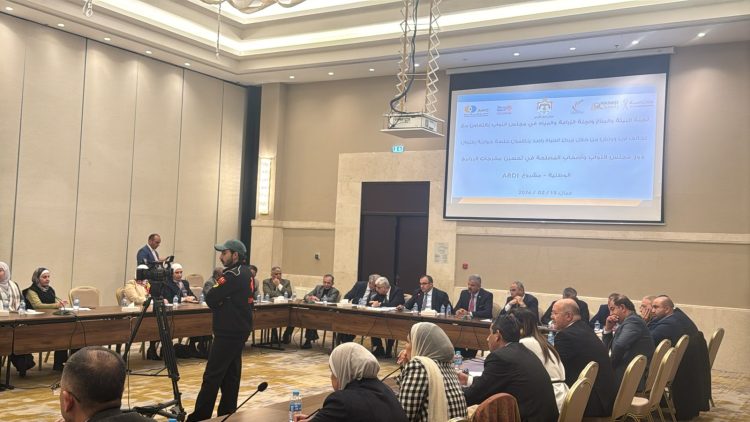
ARDI Mid-Term Evaluation and World Bank Response: Progress Achieved, Challenges Remaining
Independent monitoring plays an important role in strengthening development outcomes. By providing an external assessment of project implementation, civil society
Submission to the IMF LIC-DSF Consultation – Views on the main reform proposals
As organizations based in and/or working on the Arab world, we welcome the opportunity to provide feedback on the review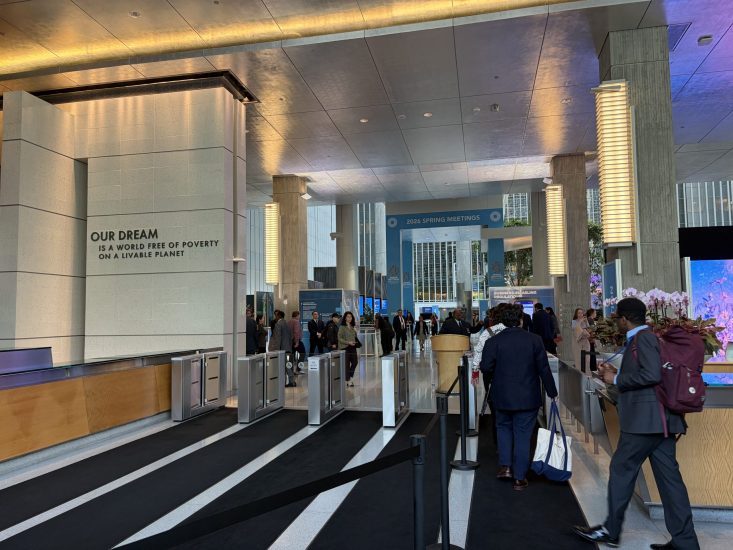
AWC Joins Growing Global Civil Society Call to Protect the Independence of the World Bank’s Accountability System
Introduction The following joint statement was prepared and published within days of the World Bank Group Board’s decision to reject
Three Mechanisms Become One: Will the World Bank Group’s Single Accountability Mechanism Deliver Better Outcomes for Communities?
On June 9, 2026, the World Bank Group Boards approved the creation of a single Independent Accountability Mechanism (IAM), bringing
What Is the World Bank Proposing to Do With Its Accountability Mechanisms?
An overview of the WBG IAM integration consultation for civil society organizations | Based on the Task Force Draft
Arab Watch Coalition Engages World Bank’s FCV Strategy Review
The World Bank Group (WBG) is currently conducting a comprehensive review of its Strategy for Fragility, Conflict, and Violence (FCV)
Between Paper and Reality: Is It Time for the World Bank’s FCV Strategy to Hear Local Voices?
In a world where conflicts are escalating and fragility is deepening, the need for more profound and proactive development responses
Statement of the Environment and Climate Change Working Group of the Arab Watch Coalition for Financial Justice that brings us closer to Comprehensive Climate Justice. From the Paris Agreement to Belém: 10 years of Unsatisfactory Results.
In the past three decades, the global financial system has reproduced itself with every crisis under the banner of “financial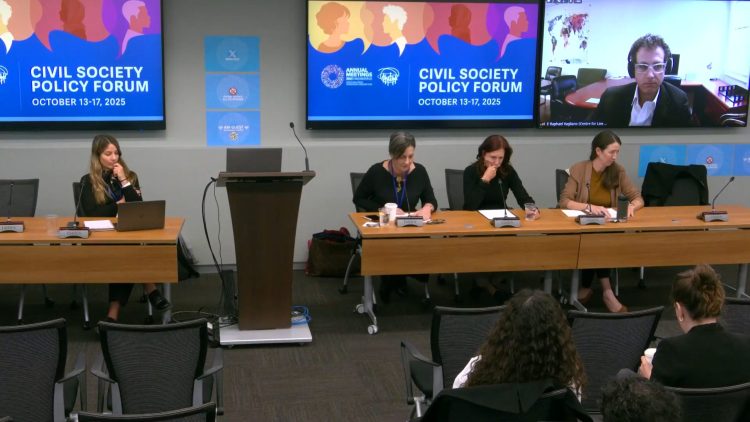
IFC Access to Information Policy: Making the World’s Largest Private Investor More Open
The International Finance Corporation (IFC) is the part of the World Bank Group that invests in private businesses all
The Need for a Sanction System for IFC Clients Violating Performance Standards: Ensuring Accountability Beyond Financial Fraud
The Need for a Sanction System for IFC Clients Violating Performance Standards Ensuring Accountability Beyond Financial Fraud Author: Amy Ekdawi
Strengthening the Role of Civil Society: Effective Strategies for Navigating IMF Negotiations
In a world fraught with economic and political challenges, civil society organizations (CSOs) emerge as a driving force in the
Proactive Preparation: The Key to Civil Society Organizations’ Success in Engaging with the International Monetary Fund
The voice of communities is among their most valuable assets. In light of the mounting challenges facing civil society organizations
IFC and MIGA Adopt First-Ever Remedy Framework: A Milestone for Accountability
In a major step forward for accountability in development finance, the International Finance Corporation (IFC) and the Multilateral Investment Guarantee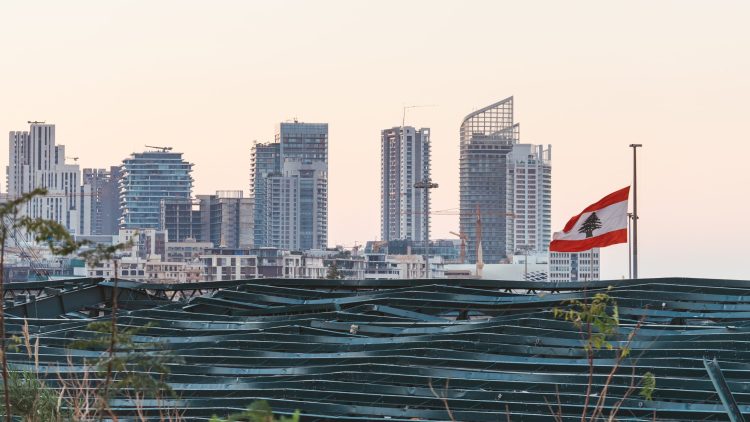
Reconstruction Priorities in Post-War Lebanon and the Imperative for Accountable, Equitable Recovery — a Primer by Arab Watch Coalition
In the wake of the 2024–2025 Israeli assault on Lebanon, the question of reconstruction has re-emerged as an urgent national
Arab Watch Coalition Members’ Participation in the 2025 OECD Watch Global Meeting
Following an invitation from the Organisation for Economic Co-operation and Development (OECD) Watch, Ms. Sihem Bouazza, Chair of the Board