
What Is the World Bank Proposing to Do With Its Accountability Mechanisms?
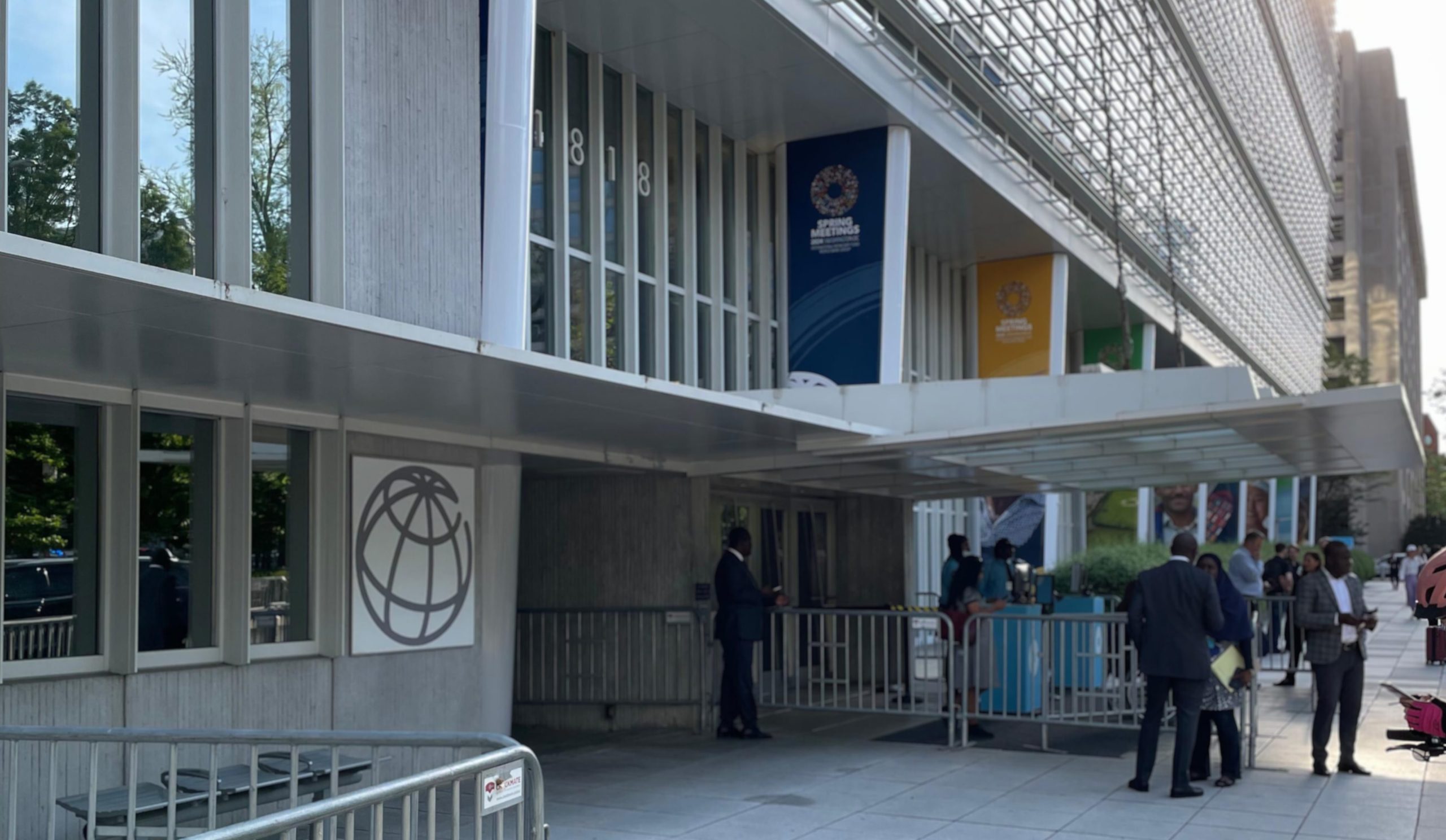
An overview of the WBG IAM integration consultation for civil society organizations | Based on the Task Force Draft Report, March 25, 2026
| Purpose of this briefing note
The World Bank Group is consulting publicly on whether to merge its three independent complaint mechanisms. This note explains what is being proposed and how civil society organizations can participate in the consultation. |
- Background
The World Bank Group (WBG) operates three independent bodies called Independent Accountability Mechanisms (IAMs) that communities and individuals can approach when they believe a WBG-financed project has caused them harm. Each mechanism is independent of WBG management and reports directly to the WBG Board.
| Mechanism | Covers | Functions |
| Inspection Panel (IPN) | World Bank public-sector lending (IBRD/IDA) | Compliance investigations |
| Dispute Resolution Service (DRS) | World Bank public-sector lending (IBRD/IDA) | Mediation/dispute resolution |
| Compliance Advisor Ombudsman (CAO) | IFC and MIGA (private sector investments and guarantees) | Compliance investigations, dispute resolution, and advisory work |
The Boards of the WBG have commissioned an independent Task Force to assess whether these three mechanisms should be integrated — either partially or fully — and if so, how. The Task Force released a draft report for public consultation on 25 March 2026.
- What Principles Are Guiding This Process?
The Board set out a number of principles in the Task Force’s Terms of Reference that any integration option must meet. These apply regardless of which structural option is ultimately chosen.
- Improved effectiveness: any changes must improve the ability of the mechanisms to serve project-affected communities, borrowers, clients, and the Board
- No regression:integration must not weaken existing accountability policies, mandates, or protections
- Independence: the IAM or IAMs must remain independent of WBG management in their functions, operations, and management
- Enhanced leadership: the WBG should maintain and strengthen its position as a leader in the field of institutional accountability
- Sufficient resourcing: the mechanisms must be adequately funded and cost-effective
- Why Is This Being Considered?
The Task Force was asked to develop a ‘third generation’ model for WBG accountability. Its terms of reference identified several reasons why integration might be beneficial:
- The WBG has undergone a broad internal reorganization called ‘One WBG,’ which merged its environmental and social risk teams across the World Bank, IFC, and MIGA. Having three separate accountability mechanisms with different rules may create inconsistency with this integrated management structure.
- A growing number of projects are co-financed by both the World Bank and IFC. When complaints arise from these projects, communities must navigate multiple mechanisms with different eligibility rules and procedures.
- The Task Force found that awareness and accessibility of the IAMs remains a major challenge across all three mechanisms. Communities often do not know these mechanisms exist, and the differences between them are difficult to navigate.
- Most comparable multilateral development banks — including the African Development Bank, Inter-American Development Bank, and European Bank for Reconstruction and Development — operate a single unified accountability mechanism.
The Task Force also noted that there is no crisis in the current operations of the three mechanisms. All are broadly effective. Integration is presented as a strategic opportunity, not an emergency response.
- What Is Being Proposed?
The Task Force presents three structural options. It has a stated preference for Option 3, but all three remain under consideration.
Option 1 — Keep three separate mechanisms, with closer coordination
The three mechanisms would continue to operate independently, each with its own leadership, policies, and budget. Changes would include a shared web portal for complaints, harmonization of some policies where the Board agrees, and greater staff collaboration and resource sharing. This option would not resolve the co-financing problem or close the gap between IPN and CAO eligibility rules without additional Board decisions.
Option 2 — One merged mechanism with two co-equal leaders
A single integrated IAM would be created, with a Compliance Panel Chair and a Dispute Resolution Director of equal seniority reporting jointly to the Board. Intake and advisory functions would be shared between them. The Task Force notes this structure was tried at the Inter-American Development Bank from 2010 to 2012 and resulted in significant conflict between the two functions, requiring Board intervention.
Option 3 — One merged mechanism with a single leader (Task Force recommendation)
A single integrated IAM would be led by a Vice President/Director General (VP/DG) who oversees all functions: compliance investigations, dispute resolution, advisory work, and administration. This mirrors the current CAO structure and the models used at the IDB, EBRD, and AfDB. The VP/DG would be selected through a multi-stakeholder process including Board members and civil society and business representatives, and confirmed by the Board.
Two sub-variants are offered: Option 3a has no standing compliance panel and Option 3b adds a small expert compliance panel that advises the VP/DG and provides quality assurance on complex cases, but remains subordinate to the VP/DG.
- Key Policy Questions Under Discussion
Regardless of which structural option is chosen, the Task Force recommends the Board provide guidance on five areas where the three mechanisms currently operate differently. These differences directly affect communities’ ability to access accountability:
Eligibility (who can file a complaint, and on what basis)
Currently, the IPN requires complainants to show they have already brought their concerns to WBG management and that management has had a reasonable opportunity to respond. The CAO requires only that complainants describe good faith efforts to engage management or explain why they could not. The Task Force recommends aligning with the CAO approach.
Two further eligibility questions are left open for the Board to decide. First, the minimum number of complainants: the IPN currently requires two or more, while the CAO allows single individuals to file. The Task Force presents two options — either allow single individuals to file for both public and private sector cases (harmonizing up to the CAO standard), or maintain the two-or-more requirement for public sector cases (non-regression).
Second, the question of representation by non-local organizations: the IPN currently requires a formal exception — and Board approval — for an organization based outside the complainant’s country to represent them. The Task Force notes this could be addressed by removing the exception requirement, giving the IAM rather than the Board the authority to grant it, or keeping the current arrangement for public sector cases.
Complainant choice between dispute resolution and compliance
Currently, communities can only access the DRS after the IPN has already recommended a compliance investigation and the Board has authorized it. Other comparable MDB mechanisms allow communities to choose between dispute resolution and compliance at the eligibility stage, before any non-compliance finding. The Task Force recommends this change.
Dispute resolution timelines
The DRS operates with a hard 12-month deadline (extendable to 18 months), after which unresolved cases automatically transfer to the IPN for investigation. The CAO has no formal deadline and uses periodic six-monthly reviews. Most peer IAMs use flexible timelines with active oversight. The Task Force recommends codifying the CAO approach.
Compliance investigation powers
Three differences exist between IPN and CAO compliance functions:
- Board approval: IPN requires Board approval before opening an investigation. CAO notifies the Board but decides independently. The Task Force presents two options: remove the Board approval requirement for all cases, or keep it only for public-sector cases.
- Self-initiation: CAO can open investigations without a complaint when specific criteria are met (severe harm risk, reprisal risk, systemic importance). IPN cannot. The Task Force presents two options: extend this power to public-sector cases, or keep it only for private-sector cases.
- Recommendations: IPN can find non-compliance but cannot formally recommend how to fix it. CAO can. The Task Force recommends giving the merged IAM full recommendation authority across both sectors.
MAP monitoring
IPN must seek Board approval case by case before verifying whether management action plans are implemented. CAO monitors as standard practice without Board authorization. All four comparable peer IAMs (ADB AM, AfDB IRM, EBRD IPAM, and IDB MICI) have standing monitoring authority. The Task Force recommends considering alignment with the CAO approach over time.
Advisory function
CAO has a broad mandate to advise IFC/MIGA and the Board on systemic environmental and social issues, drawing on case experience and good international practice. IPN’s advisory mandate is limited to lessons from cases and does not extend to commenting on WBG policies. DRS has no advisory mandate. The Task Force recommends a robust advisory function modelled on CAO’s, covering both sectors.
- How to Participate in the Consultation
The draft report was released on 25 March 2026. The overall timeline is:
| March 25 | Draft report released for public consultation |
| April 13 & 20 | Webinars for CSOs, complainants, requesters, and other stakeholders |
| April 25 | Deadline for written comments on the draft report |
| May 6 | Final report submitted to CODE (the Board’s Committee on Development Effectiveness) |
| May 20 | CODE meeting on the final report |
Submit Written Comments
The Task Force invites all interested parties to submit comments on the draft report by April 25, 2026 to IAMIntegrationTF@worldbank.org. Submissions will inform the final report.
Attend a Webinar
The Task Force is holding webinars for CSOs, complainants, requesters, and other interested parties. Registration must be completed by Monday, April 6, 2026.
| Date | Time | Registration |
| Monday, April 13, 2026 | 8:00–10:00 PM US Eastern Time | https://worldbankgroup.webex.com/weblink/register/r1a138ae51fa48355426ebe2fdfbe40e6 |
| Monday, April 20, 2026 | 8:00–10:00 AM US Eastern Time | https://worldbankgroup.webex.com/weblink/register/r798e5ec4ff57b173ebb33ba6c0a38255 |
Key Terms
| CAO | Compliance Advisor Ombudsman — the IFC and MIGA complaint mechanism |
| CODE | Committee on Development Effectiveness — the WBG Board committee receiving the final report |
| DRS | Dispute Resolution Service — the World Bank mediation mechanism |
| E&S | Environmental and Social — the standards against which compliance is assessed |
| IAM | Independent Accountability Mechanism — the general term for mechanisms of this type |
| IFC | International Finance Corporation — WBG’s private sector lending arm |
| IPN | Inspection Panel — the World Bank compliance investigation body |
| MAP | Management Action Plan — produced by management to address non-compliance findings |
| MIGA | Multilateral Investment Guarantee Agency — provides political risk guarantees |
| One WBG | The 2026 WBG internal reorganization integrating public and private sector management functions |
| PPP | Public-Private Partnership — co-financed projects involving both World Bank and IFC/MIGA |
| Task Force | The independent body (co-led by David Fairman and Charles Di Leva) commissioned to produce the draft report |
This note summarizes the Task Force Draft Report for Public Consultation (March 25, 2026). It should be read alongside the full report: https://thedocs.worldbank.org/en/doc/2c4c9d6bb621bedbfc64c954de87f429-0330032026/original/Draft-Report-for-Public-Consultation-TF-Accountability-Mechanisms.pdf