
ARDI Mid-Term Evaluation and World Bank Response: Progress Achieved, Challenges Remaining
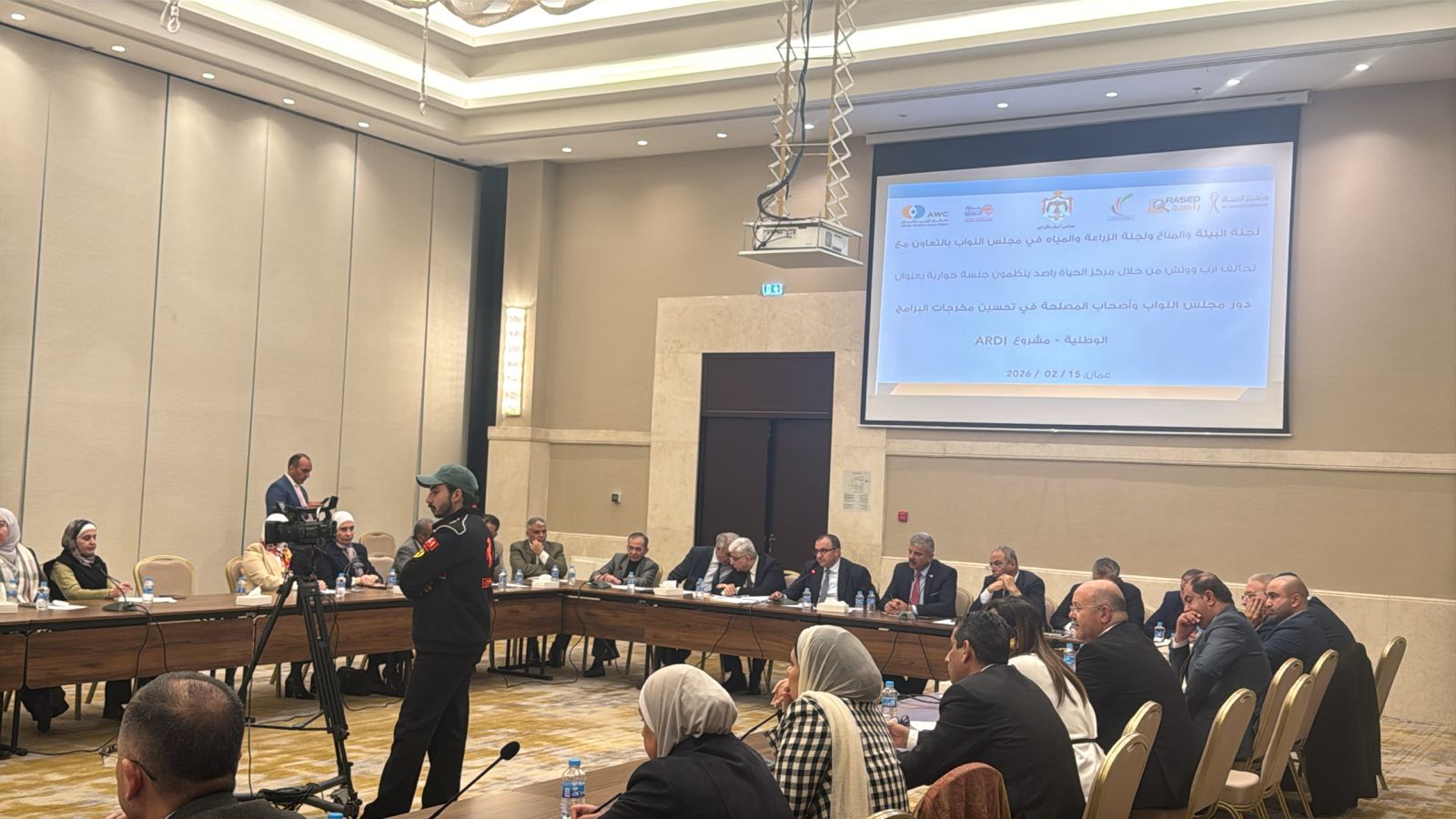
Independent monitoring plays an important role in strengthening development outcomes. By providing an external assessment of project implementation, civil society organizations can identify achievements, highlight implementation challenges, and generate recommendations that support more effective, inclusive, and accountable development. Equally important is the willingness of governments, financing institutions, and implementing agencies to engage with these findings, clarify areas of disagreement, and identify opportunities for improvement.
In January 2026, Arab Watch Coalition (AWC) members—the Phenix Center for Economic and Informatics Studies, Dibeen Association for Environmental Development, and Al-Hayat Center – Rased—completed a Preliminary Mid-Term Evaluation of the Agriculture Resilience, Value Chain Development, and Innovation (ARDI) Program in Jordan. ARDI is a US$125 million program supported through a World Bank financing package, including a US$95.6 million loan, US$23.9 million from the Global Concessional Financing Facility, and a US$5.5 million Partnership for Improving Prospects grant. It is implemented by the Government of Jordan through the Ministry of Agriculture. The evaluation assessed the Program’s implementation between 2023 and mid-2025.
In June 2026, the World Bank sent a formal written response to the evaluation, engaging point by point with its findings and recommendations.
Taken together, the independent evaluation and the World Bank’s response provide a valuable opportunity to examine how civil society monitoring can prompt constructive institutional engagement, clarification, and dialogue, even when assessments differ.
This article does not seek to determine which account is “more accurate” or to decide between competing interpretations. Instead, it reads the evaluation and the World Bank’s response side by side, identifying significant areas of convergence and reflecting on the lessons they offer for civil society monitoring, project implementation, and development practice more broadly. Rather than viewing them as competing narratives, the evaluation and the response can be understood as complementary perspectives that together provide a richer picture of the Program’s implementation.
A Program Built Around National Priorities
Despite differences in emphasis, methodology, and interpretation, the independent evaluation and the World Bank’s response begin from the same premise: the ARDI Program addresses an important national priority.
Both the evaluation and the response recognize that ARDI is closely aligned with Jordan’s agricultural and climate resilience objectives and responds to pressing national challenges related to water scarcity, agricultural productivity, and rural livelihoods. The evaluation highlights the Program’s strong alignment with Jordan’s National Sustainable Agriculture Plan, while the World Bank emphasizes its high relevance, strong country ownership, and connection to national priorities.
This shared starting point provides an important foundation for the discussion that follows. The central question is not whether ARDI addresses the right priorities, but how effectively those priorities are being translated into implementation, and how implementation can continue to improve during the remainder of the Program
Progress to Date
Having established the Program’s strong alignment with Jordan’s development priorities, the evaluation turns to its implementation. Here too, the evaluation and the World Bank’s response share important common ground: both recognize that the ARDI Program has delivered meaningful progress, even as they differ in their assessment of certain aspects of implementation and the evidence supporting them.
The independent evaluation acknowledges meaningful progress across several institutional and operational dimensions of the Program. It highlights strengthened coordination within the Ministry of Agriculture, investments in rainwater harvesting infrastructure, modernization of agricultural services and nurseries, improvements in technical capacity, and advances in environmental sustainability measures. These achievements demonstrate that the Program has already contributed to strengthening Jordan’s agricultural sector in several important areas.
The World Bank’s response also provides additional implementation data and clarifications, arguing that some of the evaluation’s conclusions do not fully reflect verified implementation results published in the Program’s Implementation Status & Results Reports (ISRs) issued in July 2025 and March 2026. It also presents additional information on infrastructure development, institutional reforms, service delivery, capacity-building, and beneficiary reach, while clarifying aspects of the Program’s financing structure, environmental and social framework, and results framework.
Read together, the independent evaluation and the World Bank’s response suggest that ARDI has made measurable progress, while also showing that implementation is still evolving. They also highlight an important feature of mid-term evaluations: they capture a program at a particular moment in time, while implementation — and the evidence used to assess it — continues to develop.
Readers interested in the detailed quantitative findings, implementation indicators, and supporting evidence are encouraged to consult both the independent evaluation and the World Bank’s response, each of which provides a comprehensive account of its respective assessment.
Opportunities for Stronger Implementation
The independent evaluation identifies several areas where implementation could be strengthened during the remainder of the Program. While the World Bank challenges some of the evaluation’s conclusions and interpretations, its response also provides additional context, updated evidence, and, in several instances, acknowledges similar implementation challenges, albeit from a different perspective. Taken together, the evaluation and the response highlight several areas where continued attention could further strengthen implementation.
Environmental and social systems. The evaluation concludes that environmental and social requirements have not yet been consistently institutionalized across implementing entities, particularly with respect to occupational health and safety, stakeholder engagement, and grievance mechanisms. The World Bank responds that significant progress has been made in embedding environmental and social requirements into Jordan’s national systems through operational procedures, regulatory reforms, training, and institutional arrangements, while acknowledging that consistent supervision and enforcement, particularly for field-based activities involving contracted workers, require continued strengthening. Together, the evaluation and the response underscore the importance of ensuring that environmental and social systems are effectively translated into implementation throughout the life of the Program.
Stakeholder engagement. The evaluation identifies a gap between the stakeholder engagement framework outlined in the Program’s design and its implementation in practice. It concludes that engagement with communities, civil society organizations, and agricultural cooperatives remains limited and that participation often relies on traditional administrative channels rather than genuine participatory mechanisms. The World Bank similarly acknowledges that the level and quality of stakeholder engagement varies across locations and that structured engagement with communities, civil society organizations, cooperatives, and vulnerable groups requires further strengthening. It also highlights ongoing efforts by the Ministry of Agriculture to improve coordination, outreach, communication, and inclusive participation. Together, the evaluation and the response point to stakeholder engagement as an area where continued efforts can help strengthen implementation.
Grievance mechanisms. The evaluation concludes that while grievance mechanisms are formally in place, they do not yet operate effectively in practice. The World Bank similarly acknowledges implementation challenges including beneficiary awareness, accessibility, institutional fragmentation, and complaint tracking and reporting while outlining ongoing efforts to strengthen these systems. Together, the evaluation and the response highlight grievance redress as an area requiring continued attention
Monitoring and evidence. The evaluation calls for stronger monitoring systems capable of capturing longer-term outcomes and impacts. The World Bank responds that additional outcome data and disaggregated indicators are already available through the Program’s Results Framework and published ISRs, and that some results are expected to emerge later in implementation. While they differ in their assessment of the available evidence, both the evaluation and response underscore the importance of reliable monitoring and transparent reporting for assessing implementation progress and informing future decisions.
Why Independent Monitoring Matters
Perhaps the most important lesson emerging from the independent evaluation and the World Bank’s response is not whether every individual finding is accepted or disputed. Rather, it is the value of the dialogue itself.
Independent monitoring is often viewed primarily as a mechanism for identifying implementation gaps or holding institutions accountable. While these functions are important, its contribution extends much further. Independent monitoring generates evidence, brings community perspectives into policy discussions, and creates opportunities for implementing institutions to clarify data, explain decisions, respond to concerns, and strengthen implementation.
The World Bank’s response illustrates this dynamic. Beyond challenging aspects of the evaluation’s methodology and interpretation, it also provides updated implementation evidence, explains reforms already underway, and acknowledges several areas where additional work remains necessary including stakeholder engagement, grievance mechanisms, environmental and social systems, and institutional capacity. Whether or not one agrees with every point raised in the World Bank’s response, the exchange itself contributes to greater transparency, accountability, and learning.
In this sense, independent monitoring creates constructive engagement and accountability. It encourages implementing institutions to engage with external evidence, reflect on implementation challenges, and demonstrate how identified issues are being addressed. The detailed nature of the World Bank’s response suggests that the evaluation prompted careful institutional reflection on issues that may otherwise have received less systematic public attention.
For civil society organizations, this reinforces an equally important lesson: monitoring is not an end in itself. Its value lies in generating credible evidence, encouraging dialogue, and contributing to stronger implementation throughout the life of a project.
Looking Ahead
The ARDI Program is being implemented in one of the most water-stressed agricultural contexts in the Middle East, addressing challenges—including climate adaptation, agricultural competitiveness, and rural livelihoods—that are central to Jordan’s long-term development. In such a context, effective implementation matters just as much as sound project design.
The independent evaluation and the World Bank’s response demonstrate that engagement is not a single event but an ongoing process. Independent monitoring helps identify implementation challenges and elevate community perspectives, while institutional responses can provide additional evidence, clarify misunderstandings, and explain corrective actions already underway. Together, they contribute to a more complete understanding of project performance.
For AWC, this experience reinforces the value of constructive, evidence-based engagement. Recognizing progress and identifying implementation challenges are complementary—not contradictory—objectives. Together, they contribute to stronger implementation and help ensure that development finance delivers meaningful and lasting benefits for the communities it is intended to serve.
As the ARDI Program moves into its next phase, continued dialogue among government institutions, the World Bank, civil society organizations, and affected communities will remain essential to sustaining progress and addressing implementation challenges.