Towards more inclusive, participatory, just and sustainable development. |
| |
Arab Watch Coalition Newsletter 2026
|
| |
|
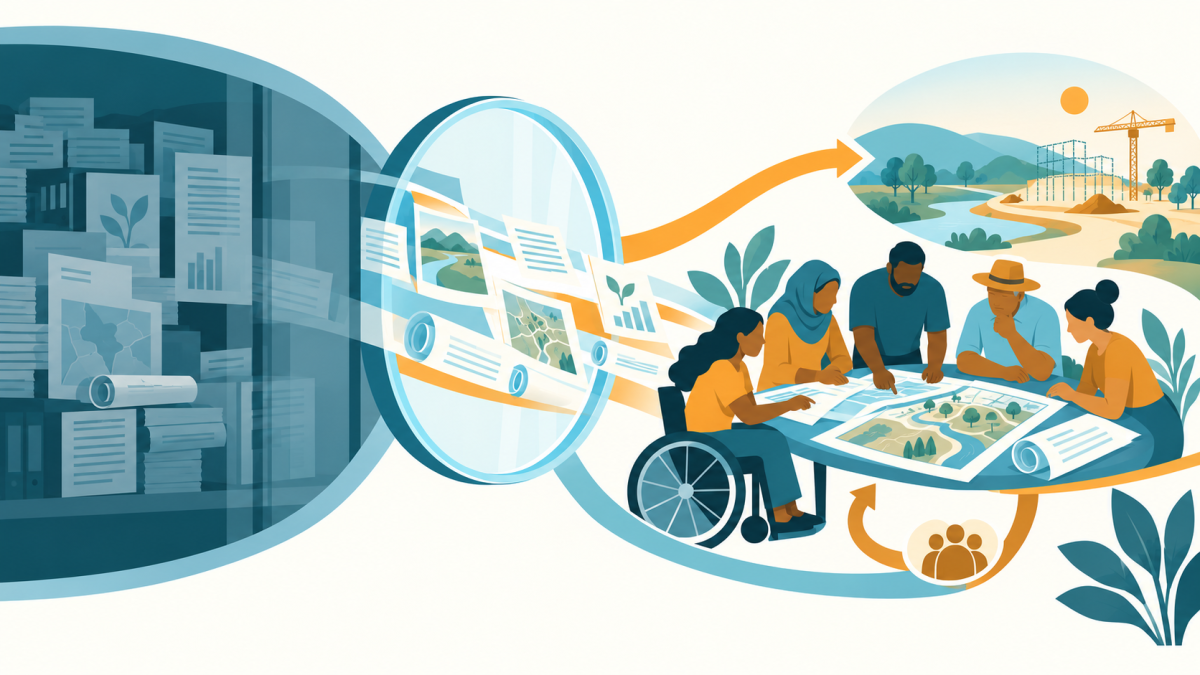
How can World Bank Group policies better respond to the needs and concerns of affected communities? AWC’s recent advocacy addresses this question through recommendations on accountability, conflict-sensitive development, and access to information.
Together with partners, we have called for a strong, independent World Bank Group accountability mechanism that effectively addresses communities’ concerns and facilitates access to remedy. Our submission on the Fragility, Conflict, and Violence Strategy calls for an approach that addresses drivers of conflict beyond private-sector job creation, strengthens essential services and local institutions, and involves civil society as a genuine partner. Alongside this work, we are advocating for greater access to information, which is essential for communities to understand projects that affect them, participate in decisions, and hold financing institutions accountable. Through our joint recommendations on the International Finance Corporation’s (IFC) Access to Information Policy, we are calling for greater transparency and changes to address gaps in the policy.
This newsletter also features our members’ independent monitoring of WBG projects, our advocacy on reconstruction in Lebanon and Syria, and our engagement with the IMF on debt sustainability, economic recovery, and strengthening civil society access to information and input into IMF consultations and policy discussions.
|
| |
|
Strengthening WBG Accountability
|
| |
|
In June, the World Bank Group (WBG) Boards approved the integration of the Inspection Panel, Dispute Resolution Service, and Compliance Advisor Ombudsman (CAO) into a single Independent Accountability Mechanism (IAM). AWC is calling for the new mechanism to adopt the strongest provisions of the existing mechanisms across public- and private-sector projects, alongside changes in how management responds to findings and addresses harm.
In its comments on the Task Force’s draft report (the Task Force was appointed by the WBG Boards to develop recommendations on integrating the three mechanisms), AWC stressed that bringing the Inspection Panel, Dispute Resolution Service, and CAO under a single institutional structure would not, on its own, resolve persistent delays in implementing management action plans (MAPs), management resistance to investigation findings, or inadequate remedial action. We called for stronger policies and changes in institutional incentives and culture so that complaints are treated as opportunities to address harm rather than as reputational threats. This requires management to act on findings and implement measures that adequately address the harm identified.
In a joint policy paper, AWC and partner organizations set out recommendations for the policy framework of the new WBG accountability mechanism. These include allowing investigations without Board approval; enabling communities to complain without identifying specific policy violations or approaching management first; and protecting their choice of representatives. Our recommendations also include an explicit mandate to facilitate access to remedy, authority to recommend remedial measures, and independent monitoring of management action plans.
AWC also joined a global civil society call to protect the accountability system’s independence following the Boards' decision in the Cambodia micro-finance case and the resignation of CAO’s Director General. AWC continues to engage with partners on the new IAM policy. Most recently, it participated in a six-day social media campaign calling for the strongest provisions of the existing mechanisms to be carried into the new framework. AWC and its partners will continue pressing for the WBG Boards’ commitment to non-regression to be upheld in the final policy.
Further reading
The WBG board’s decision and AWC’s engagement
Read the update →
Explainer: What Is the World Bank Proposing to Do With Its Accountability Mechanisms?
Read the update → |
| |
|
Making the FCV Strategy Deliver for Communities
|
| |
|
Our analysis of the approved Strategy for Engaging in FCV Settings (2026–2030) highlights gaps between its stated commitments and the requirements for putting them into practice. It calls for greater transparency in how conflict risks are assessed, indicators that measure who benefits from jobs, and a meaningful role for local actors in decision-making.
These priorities also featured in our earlier joint consultation submission with partner organizations across MENA. Together, we called for the strategy to address drivers of conflict beyond private-sector job creation. Recommendations include measuring who benefits from jobs and how their distribution affects conflict; treating health, education, and social protection as foundations for stability; strengthening local institutions; and establishing genuine partnerships with civil society.
This emphasis on local participation is also central to Between Paper and Reality, in which AWC member and Board President Ammar Alshwbi makes the case for grounding the Bank’s approach in local knowledge and involving civil society throughout project design, implementation, and evaluation.
Practical resource
CSO Guide & FAQ — Understanding the World Bank Group FCV Strategy (2026–2030). Use the guide to understand key terms, identify advocacy questions, and explore implications for Syria and Lebanon.
Read the guide →
|
| |
|
Strengthening IFC Transparency & Access to Information
|
| |
|
Timely access to information is essential for communities to participate in decisions that affect them. AWC convened a civil society working group to coordinate advocacy on IFC’s Access to Information Policy as part of the Sustainability Framework review.
In the joint submission, AWC and partner organizations call for the policy to cover all information held by IFC, subject to clearly defined exceptions. The submission seeks to strengthen the existing presumption of disclosure, require evidence of likely harm before information is withheld, and make disclosure mandatory when the public interest outweighs that harm. It also recommends earlier and fuller project disclosure—including information on high- and medium-risk subprojects financed through commercial banks—simpler information requests, and broader grounds for appealing policy violations.
Our advocacy with IFC is ongoing. At a May 7 follow-up dialogue, the working group elaborated on a broader set of recommendations, including that environmental and social information should not be treated as commercially confidential; full project documents should be disclosed with exempt information redacted; and IFC should assist requesters facing literacy, language, or digital-access barriers. IFC recorded the group’s positions and acknowledged its feedback on making project documents easier to find and improving their accessibility and translation. This continued dialogue is a constructive step as the AIP update moves into drafting, and AWC and its partners will continue advocating for a stronger policy.
AWC is also part of the broader civil society group engaging IFC and MIGA on the Sustainability Framework review, which is organized through several thematic working groups. As part of this broader engagement, AWC joined 115 other civil society organizations in a September letter urging WBG Executive Directors to uphold four principles: alignment with international best practice and human rights norms, non-regression from existing safeguards, stronger implementation, and open, meaningful consultation with those most affected by IFC and MIGA projects.
Further reading
AWC’s engagement →
Follow the IFC/MIGA review →
|
| |
|
IMF Engagement: Debt Sustainability, Recovery, & Civil Society Participation
|
| |
|
AWC has expanded its engagement with the IMF across several policy and institutional processes, focusing on debt sustainability, fiscal space, economic recovery, and the Fund’s work in fragile and conflict-affected contexts.
One strand of this work focused on the IMF–World Bank review of the Debt Sustainability Framework for Low-Income Countries. AWC worked with partner organizations across the region to develop and submit joint recommendations. Drawing on Yemen and Syria, the submission calls for debt assessments to consider whether countries retain sufficient fiscal space for essential services and recovery. It also calls for greater transparency and opportunities for civil society scrutiny.
In Yemen, AWC is following prospective IMF engagement and assessing the implications of a potential new programme. This work includes reviewing Yemen’s previous experience with the Fund, identifying risks and civil society priorities, and developing advocacy around transparency, consultation, social protection, fiscal space for essential services, and the distributional impacts of potential reforms.
Alongside this country-level work, AWC is engaging with broader discussions about the IMF’s approach to fragile and conflict-affected states, including the Independent Evaluation Office’s evaluation of the Fund’s work in these contexts. Drawing on experiences from Lebanon, Syria, and Yemen, AWC is working to bring regional civil society perspectives into discussions about IMF surveillance, programme design, conditionality, and stakeholder engagement in conflict-affected economies.
Across these areas, AWC emphasizes that debt sustainability and macroeconomic stabilization should be assessed alongside countries’ development, recovery, and social spending needs. Civil society should also have access to relevant information and meaningful opportunities to engage with IMF decision-making.
Resources
Readers can explore AWC’s toolkit on understanding and engaging with the IMF, which explains the Fund’s structure, decision-making processes, and entry points for advocacy.
Read the toolkit →
AWC has also published short guides on proactive preparation and strategies for civil society engagement during IMF negotiations.
Read the guide →
Read the guide → |
| |
|
Reconstruction in Lebanon and Syria
|
| |
|
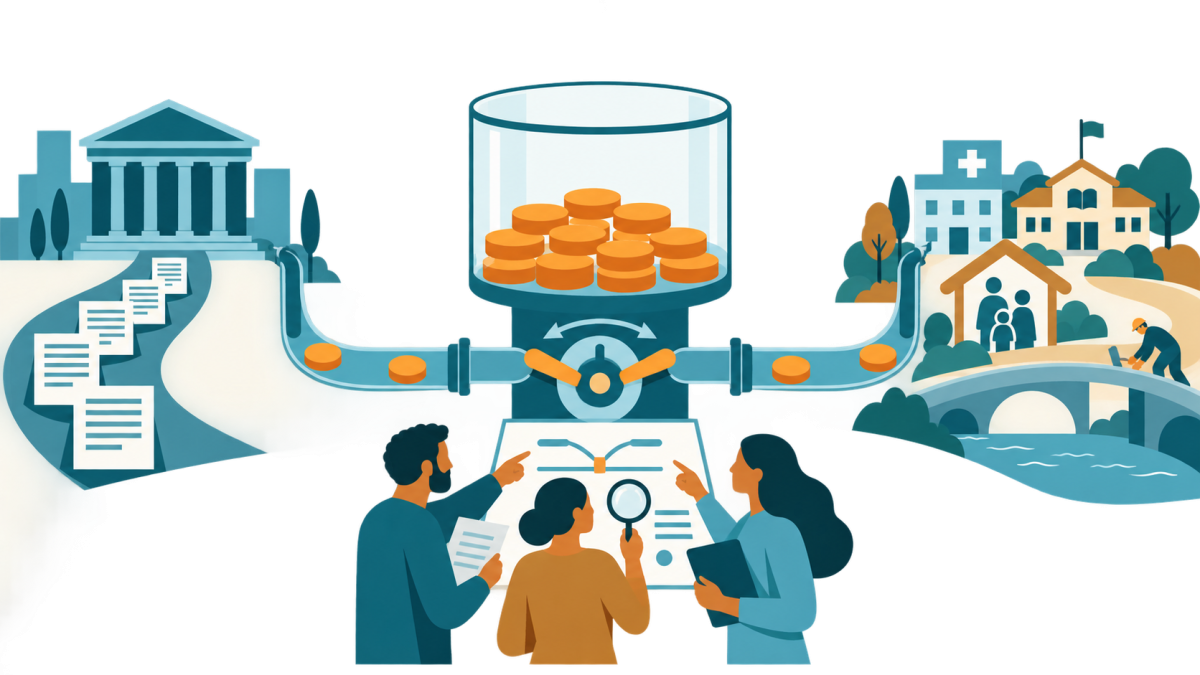
AWC has continued to develop its work on reconstruction and economic recovery in Lebanon and Syria, with a focus on ensuring that reconstruction financing is transparent, accountable, rights-based, and responsive to affected communities. This work examines the role of international financial institutions and other development actors in shaping reconstruction priorities, including how financing decisions affect public services, social protection, employment and labour rights, and the distribution of reconstruction resources.
As part of this work, AWC has been mapping key institutions, civil society organisations, researchers, and policy actors working on reconstruction, particularly in Lebanon, and beginning targeted outreach to identify opportunities for coordination and policy engagement. AWC is also developing its engagement with the World Bank and other relevant institutions around reconstruction financing, with particular attention to transparency and accountability mechanisms, meaningful civil society participation, and the social and economic impacts of reconstruction programmes.
These priorities will also inform AWC’s contribution to the 2026 IMF–World Bank Annual Meetings, including its Civil Society Policy Forum session on reconstruction in fragile and conflict-affected contexts. The session will examine the kinds of jobs generated through IFI-financed reconstruction and whether reconstruction programmes adequately incorporate labour rights, decent work, accountability, and protections for affected workers and communities.
Further reading
The Reconstruction Vacuum In Lebanon
Read the article →
Reconstruction Priorities In Post-War Lebanon And The Imperative For Accountable, Equitable Recovery — A Primer By Arab Watch Coalition
Read the article → |
| |
|
Strengthening Civil Society Project Monitoring
|
| |
|
AWC supports member advocacy by sharing knowledge about international financial institution policies and projects and facilitating members’ access to these institutions. AWC members use findings from their independent monitoring to advocate for better implementation of environmental and social requirements, clearer communication from the World Bank and project implementers to affected communities, and grievance mechanisms that people can understand and use.
Jordan: Evaluating the ARDI Program
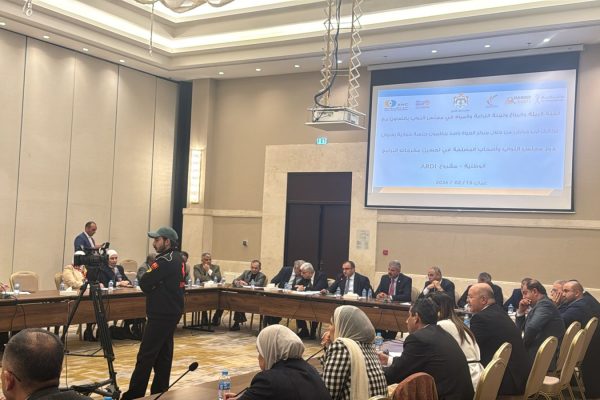
The Phenix Center, Dibeen Association, and Al-Hayat Center – Rased conducted a preliminary mid-term evaluation of the Agriculture Resilience, Value Chain Development, and Innovation (ARDI) program. The World Bank responded to the evaluation in writing, disputing some findings while acknowledging challenges related to stakeholder engagement, grievance mechanisms, and environmental and social supervision.
Read the evaluation →
AWC’s webinar, How Do We Monitor World Bank Projects? Practical Experiences from Jordan, shares lessons from members’ monitoring and engagement with the World Bank.
Watch the webinar →
Tunisia: Evaluating a World Bank-Financed Agricultural Project
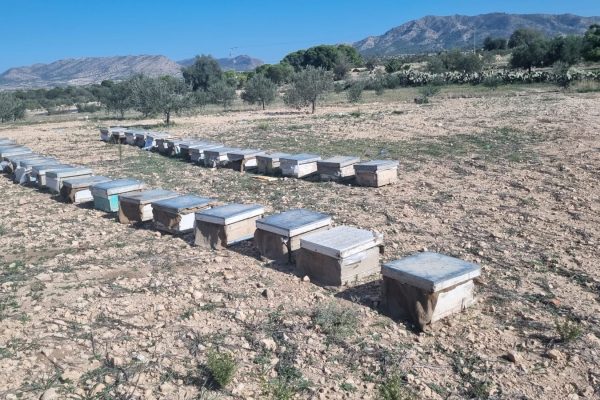
In Tunisia, AWC member organizations focused on the independent evaluation of the World Bank-financed Support to Economic Recovery and Job Creation in the Agri-Food Sector and Rural Space in Tunisia project, implemented under the Tunisian Rural and Agricultural Chains of Employment (TRACE) program.
In an interview, Charfeddine Yakoubi of Onshor discusses the evaluation’s finding that most project beneficiaries surveyed did not know the project’s grievance mechanism existed. He calls for clear, accessible information explaining what the mechanism is and how beneficiaries can use it. He also argues that monitoring should examine how project information reaches people, who is excluded from the project and why, and whether beneficiary-selection and complaint procedures are clear and fair.
Read the interview with Charfeddine Yakoubi →
Continuing Independent Monitoring in Lebanon and Tunisia
Building on these experiences, AWC members are continuing their independent oversight of World Bank-financed agricultural projects through the second phase of the Towards Sustainable Agriculture Policies and Practices in the Arab Region initiative, launched earlier this year.
Lebanon: The GATE Project
Terre Liban and Lebanon Eco-Movement are monitoring the World Bank-financed Green Agri-food Transformation for Economic Recovery (GATE) project. They have met with implementing agencies to present civil society recommendations and expanded outreach to additional areas so potential beneficiaries can better understand the project. They have also participated in two official stakeholder consultations organized by project implementers.
View the WB's Gate project page →
Tunisia: Continuing Work Under TRACE
The Association Tunisienne de Droit du Développement, Onshor, and Association Tunisienne de Gouvernance Locale are continuing to monitor the World Bank-financed project implemented under TRACE as its geographic coverage expands. Members prepared an accessible informational brochure for potential beneficiaries, established a direct feedback channel with the World Bank’s Tunisia office to receive ongoing project updates, and met with key implementing agencies.
View the WB's Trace project page → |
| |
|
We thank our members, partners, and donors for their continued support and collaboration ! |
| |
|
Visit our website for more!
|
| |
|